
MOVEMENT RITUALS WORKSHOP WITH BARIS [14-16 MAY]
14 - 16 MAY 2026 Book Via our App →
What to Expect
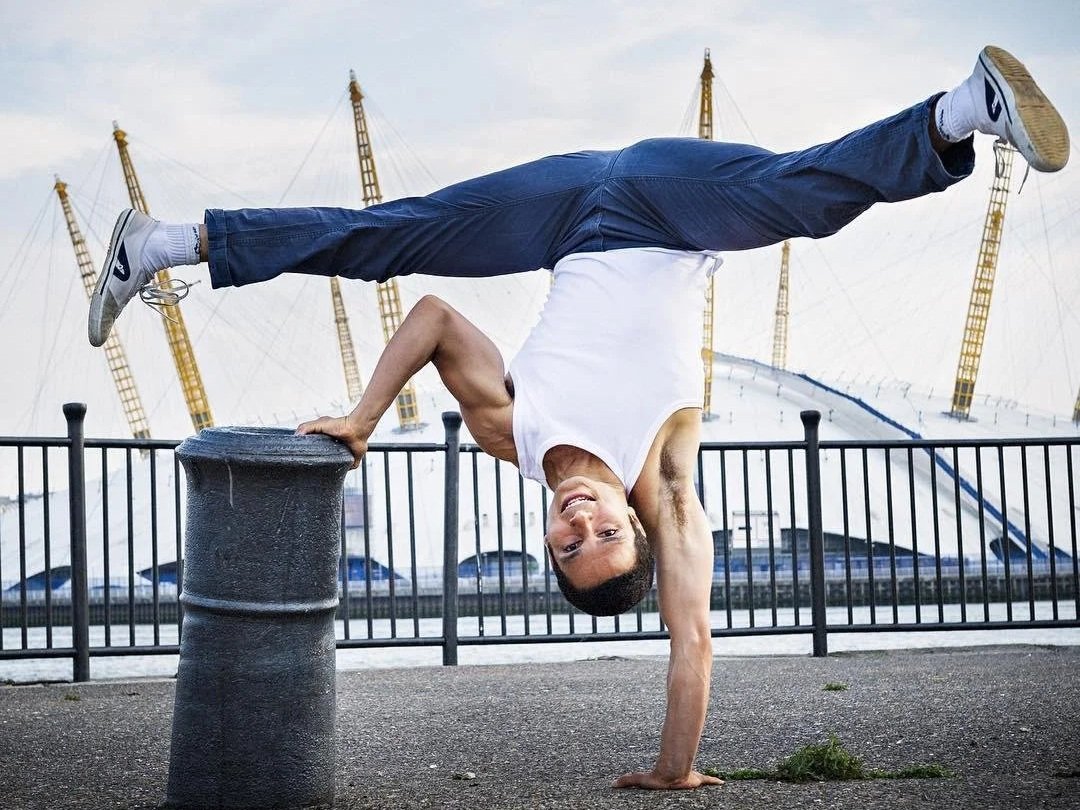
Through these three days I will be sharing with you some practices which will take us on a playful journey toward what I refer to as ‘playstate’ (a state of ‘being’, beyond play it self toward a state of ‘playfulness’)
You will be introduced to Bambubodies Movement Rituals practice: a framework toward a personal self regulatory and customisable practice which can be applied as a supplement to practitioners daily activities or as a sustainable stand alone prehabilitive practice developing practitioners physical literacy, competence and fluency through the lens of Capoeira concepts and practice(s).
Get ready to travel our inner and outer worlds and explore !
THURSday 14th may
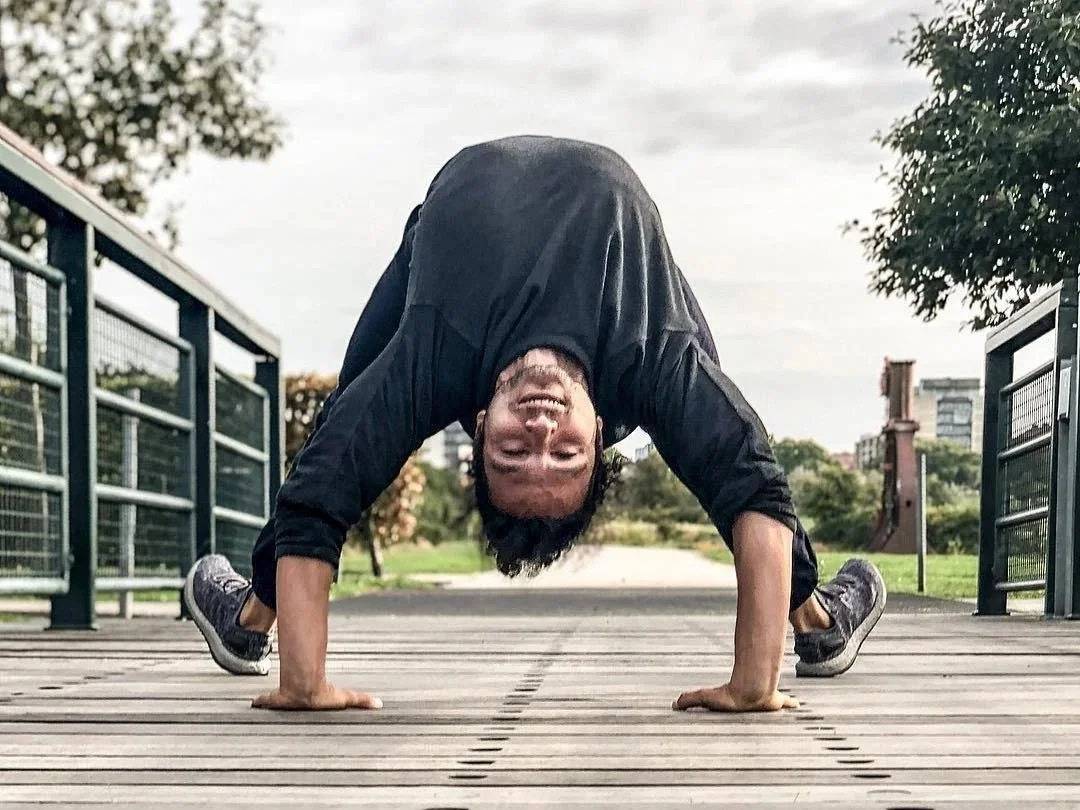
18:30 - 21:00 → Movement Class: BambuBodies Movement Rituals
FRIDAY 15TH may
09:00 - 11:30 → Movement rituals, inquiries + Physical literacy
11:45 - 13:00 → From Mobility to ‘Movability’ foundations
14:30 - 15:00 → Observation point, Questions & Discussion
15:00 - 15:30 → Inquiries and playstate
15:30 - 17:00 → Falling to ‘Floreios’
saturDAY 16TH may
09:00 - 11:30 → Movement rituals, inquiries + Physical literacy
11:45 - 13:00 → Floreios and Fluency
14:30 - 15:00 → Observation point, Questions & Discussion
15:00 - 17:00 → Movement Semantics & Alchemy
What is Bambubodies Movement rituals ?
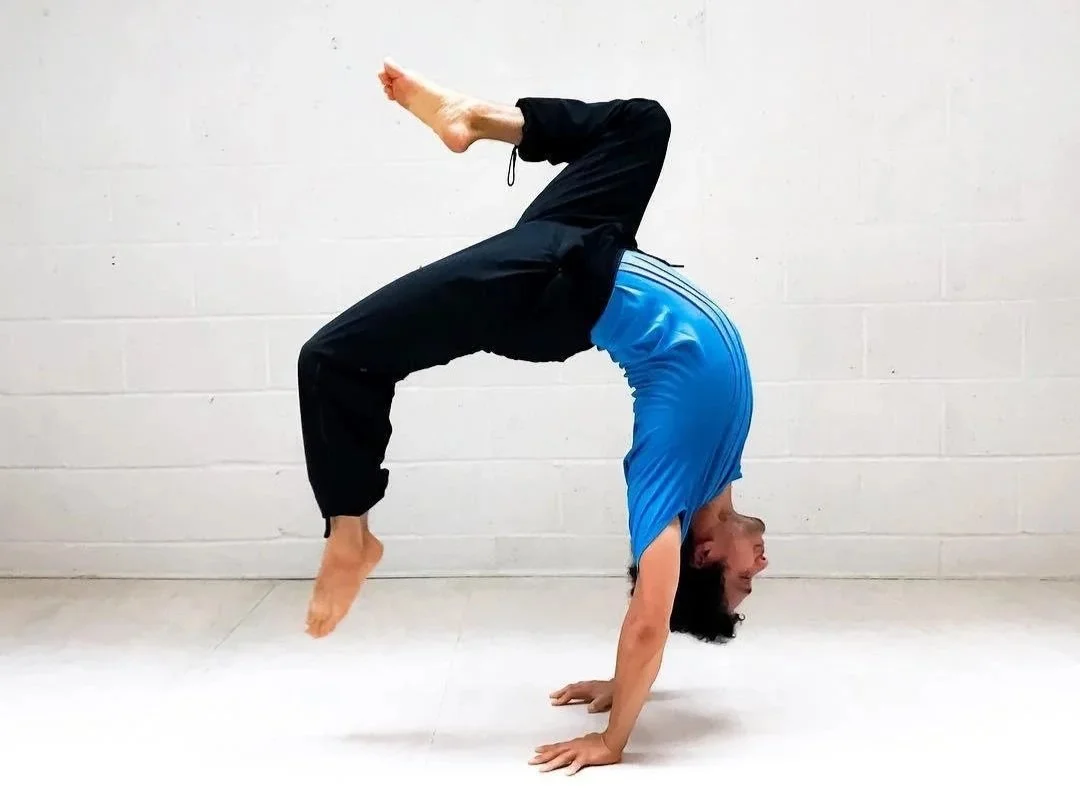
A movement pedagogy and framework which integrates:
1. Physical Conditioning
(Where we clinically focus on mobility, form and quality of fundamental exercises like
press ups / squats and sit ups in key specific ways not only serving as pre-habilitative exercises for common injuries but also making them directly transferable to skill acquisition later)
2. Mind-Mody inquiries
(Where we utilise various somatic inquiries in order to create curiosity encourage exploration and develop coordination,
body awareness bringing our movement to life!)
In order to develop strength, supplty, agility, coordination the attributes and confidence to move freely with grace and ease, preparing you for any other physical activity.
Quite simply see this session as a primer or supplement to all other physical activity you may want to engage in.
What is ‘moveability’?
Think of it as your ability to apply ‘exercise’ in context to practically use in your day to day life.
What is physical literacy ?
Just as being literate gives us the ability to read and write not only in order to learn and understand varying subjects but also how to express ourselves.
It’s through our degree of ‘physical literacy’ that we develop competence and capacity to able to express one self with different qualities of movement in a variety of contexts to meet the demands of the moment and activity we are engaged in.
Physical literacy is about not only about developing your physical competence, confidence, and knowledge/understanding of movement but embodying it!
Why invest and develop your physical literacy ?
The development of our physical literacy can lead us to self-inquiry/self-realisation, a spiritual/psychological deepening of who we are and our meaning as a human being. As one hand washes the other this then can be applied in the real world through our behaviour and how we regulate our selves in different environments, connect and interact with the world around us confidently in order get a sense of who we are, building an intersubjective network/language of movement through which we understand ourselves collectively through varying cultures of movement where people come together to share and relate to one another through the medium of the arts, sport, combat, dance, storytelling etc.
Our physical literacy is a life long path toward improving the relationship with one self, other and our environment and unlike a qualification once embodied a body of knowledge which cannot be taken away from us !
On Relationality (in movement):
An often missed aspect in our movement is our relationality with the world.
Whether we realise it or not all movement is relational And therefore require us to be attuned to other and/or our surroundings
Motor control and decision making that comes along with dealing with risk in challenging scenarios in martial arts can help us develop clear discernment rather than prejudice in challenging circumstances which can help us regulate ourselves more calmly in situations in what others may view as risky, dangerous or something to be avoided at all costs.
Dancing with a partner in dance helps us find connection through rhythm and somatic communication and builds our ability to respond to others directly and immediately without the need for verbal language.
The power of Capoeira practice(s) is that they constantly highlight this Relationality and relationship between elements; the interplay between two people, between mover and the music, between the body and the ground.
This reciprocity and relationality, when cultivated, can relieve the pressure of 'performing' a movement. It also invites us to deeply listen and thereby see ourselves as intimately connected and interdependent with the world around us and nature our original social network.
On cadence and rhythm:
it doesn’t need to be complicated
having music and rhythm not only as ‘background noise’ but acknowledging it as powerful tool, a ‘channel’ or ‘an invitation or offering’, to move! a means to connect and summon presence which can subtly open pathways mentally and physically not yet experienced or blocked in your movement.
Cadence and rhythm are closely related concepts that can develop the flow, fluidity and structure of not only musical but your movement phrases.
What are ‘floreios’ ?
🌺🌸[flo•rey•yous]🌺🌸
‘Floreio’: From the Brazilian Portuguese (flor - flower - to flourish) Floreio(s) is a Capoeira concept which embodies an evolving family of acrobatic movements commonly popularised and utilised today by the ‘movement’ field often described as ‘soft or arching acrobatics’.
We tend to think of movement skills we cannot do as something to attain, foreign concepts residing outside of ourselves somewhere far beyond our current physical (cap)abilities. This perceived distance and the constant chase of trying to gain and attain ‘tricks’ via blind repetition can be tiring, frustrating and a path paved with preventable injury, to both body and ego. If this perspective is something you can relate to and hasn’t served you so far, it maybe about time to join us and shift your perception in this highly practical workshop delving into fundamental ‘Floreio’ (aka Soft acrobatic) practice.
Through ‘floreio’ practice we will develop our confidence by confronting our fear of falling and explore objective and practical ways of navigating the uncharted dimensions between our body and space. Our spatial awareness will grow through developing sensory/proprioceptive feedback mechanisms and physical risk assessments. We will learn how to become supple, agile, pliable and light as a feather developing fluid transitions.
What uniquely differentiates Capoeira ‘floreios’ from other disciplines is the emphasis on expression which makes them readily available for any body to learn.
This playful and inquisitive approach is the key to learning and development as once you arrive in this state of being you are available to see, learn and embody. Welcome to a beginning of a new journey of infinite possibilities.
Our aims:
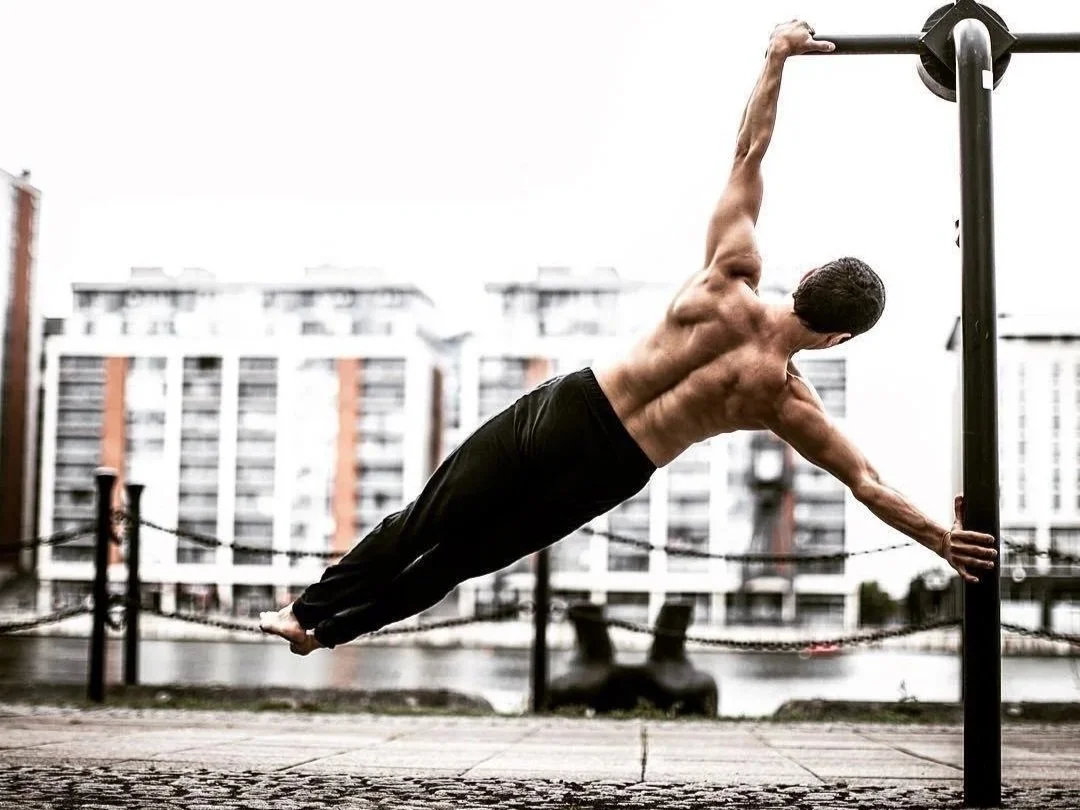
1. To get more comfortable and confident upside down
2. Overcome the fear of falling
3. Learn practical tools for self practice In order to safely begin practice of:
▪️Macaco
▪️QDR ‘Queda de Rins’ (Elbow lever)
▪️Walkovers (Au de frente/Macaco em pé)
On Falling:
One of the constant things Ive heard repeatedly in my career from practitioners and students alike has been
Baris ‘I wish I would have started this earlier’
When I ask why? It’s something along the lines of: ‘I would have had less fear’
And when I ask What makes you think that ?
The answer usually is: ‘Because as I child I had no fear I was fearless, and I see children doing this stuff like you do
It’s because they have no fear’.
That’s a interesting and common narrative
But let me share something with you
As a father of 2, a coach, a practitioner and as a toddler that never grew up. Children have 2 main innate reflexes
Which could start to be interpreted through our personal experiences development as ‘fears’
1. Of loud noises
This is why sudden loud noises will startle toddlers even make them cry
2. And the other of falling
And why putting babies down to sleep can be so difficult as the baby can the sensation of falling if put down suddenly
They’re survival mechanisms. But if your looked at kids from a far you wouldn’t think that they have these fears right because everywhere kids are is loud and their always falling!
We simply tend to call all this play!
Where little ones are actively engaging with things which are fun. Yes FUN! Where there is certainty but also a healthy dose of risk and UNCERTAINTY!
And this is key, playfulness a state of being playful.
For adults, a state of being able to recognise and discern between contradictory ideas in your mind but not being offended by them or taking them too seriously.
It’s not that children don’t have fears it’s that they are more attentive and focused toward play being playful rather than then the fear of being afraid or failing. Which In turn makes it them appear more confident when engaging with the possibility of falling.
So now just ask yourself when was the last time you didn’t take what you believe so seriously when was the last time you were on an off balance regularly?
Make sense ?
Most people don’t start because they think their issue is physical and they need to do something miraculous to change that. As they think lack something or the other physically.
So usually it’s something like: ‘I need to get stronger’ or ‘I need to be more flexible to be able to start to do that’.
When in fact that there is a half truth. The initiator is not only physical but one of perception also phycological.
You have to begin by being playful enough to start.
Toddlers are less identified with the outcome of their movement which makes them playful and curious.
So yes they maybe more confident brave not because of the absence of fear
But rather the presence of being playful !
About BARIS
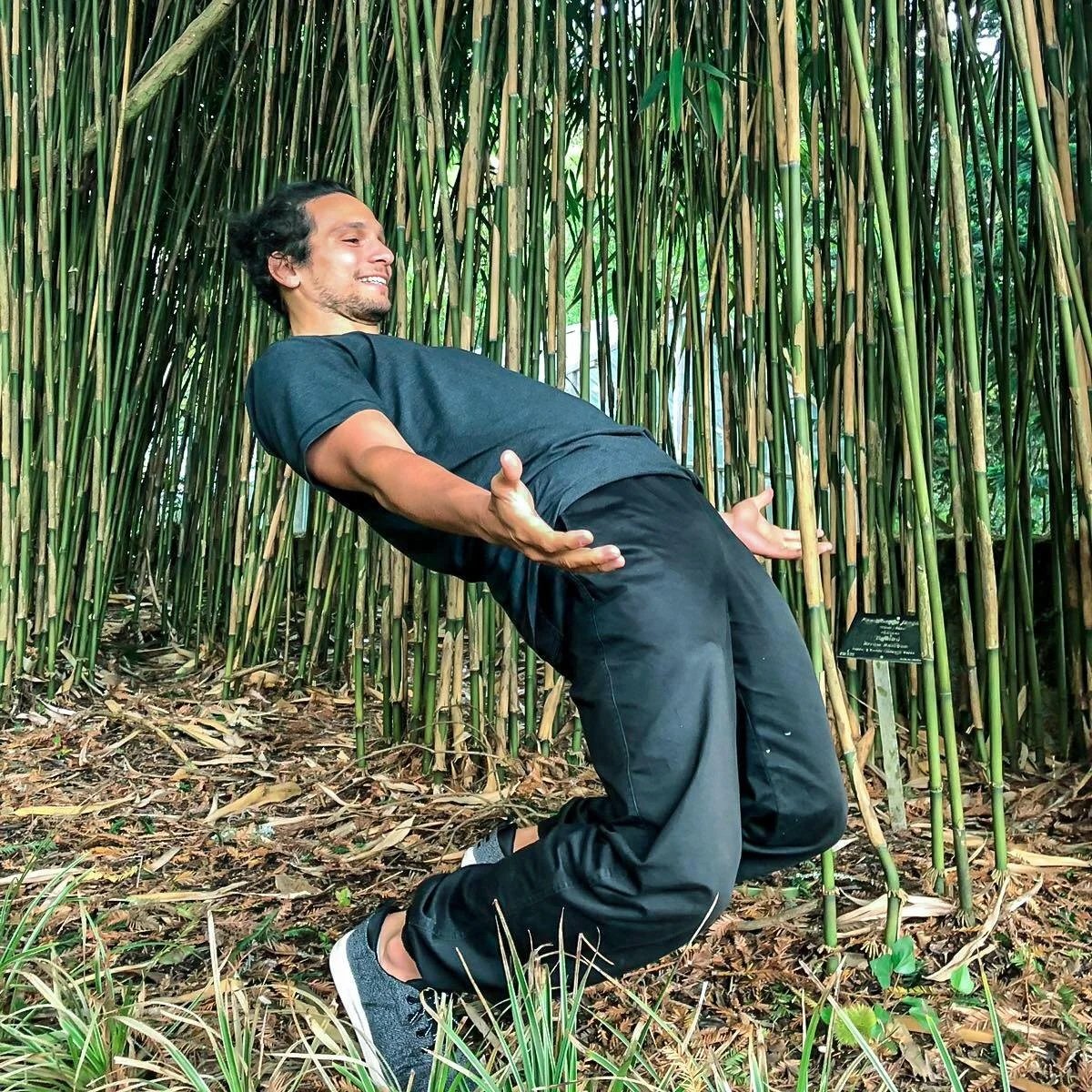
A Practitioner, performer, teacher, mentor and manual therapist.
Baris Yazar has over 25 years of experience in the arts. A journey which began at a young age through his passion for poetry and music led him toward a movement and Capoeira practice, performing, and teaching both within the UK and abroad.
He has taught Capoeira throughout primary and secondary education in London as well as teaching capoeira as part of GCSE Physical Education courses and has shared Capoeira with young people with severe learning difficulties at organisations such as HAFAD (Hammersmith & Fulham Action on Disability).
His outstanding capacity and contribution as a teacher to the community was recognised as a multi time Lukas award winner ‘Best Brazilian Dance Teacher of the year’. In addition to teaching, Baris has performed at many prestigious venues, including: The Royal Albert Hall, Wembley Arena and the opening of the O2 Arena. He has also hosted workshops and taught in many schools and institutions (Laban, The Place, Central School Of Speech and Drama), at events and festivals, throughout the Uk, Europe and in the United States. Baris is also a qualified soft tissue therapist and yoga instructor.
For the last 10 years has also lectured on movement at the University of East London Dance degree, formerly known as: Urban Dance Practice BA(hons) diploma.
Currently Baris continues to build his work with Bambubodies (@bambubodies) which aims to deliver ‘physical literacy’ through the lens of capoeira practice(s) and the importance of developing 3rd spaces which cultivate collaborative, co regulatory contemplative practices for self realisation, regulation and actualisation.
Early Bird Price: 1,450